Showing posts with label cameras. Show all posts

Monday, 11 June 2007

Wi-Fi enabled SD cards coming to a camera near you


While digital cameras with Wi-Fi built in haven't exactly taken off, it makes sense in this ever-more wireless world that Wi-Fi will become a standard means of connecting a digital camera, eventually. However, Eye-Fi have come up with a solution which might be a bit nearer off and save you the trouble of updating your camera yet again. They plan to incorporate a Wi-Fi chip directly onto the standard SD card format, so you would get storage and connectivity in one. However in addition to easily sending photos to your personal computer you'll also be able to share photos instantly with online photo and social networking sites.

Friday, 9 March 2007

Geo-tagging - another reason to upgrade your camera.

In November I replaced my Sony DSC-P10 digital camera with a very nice Canon IXUS 850IS. This was quite a big step for me - to move away from Sony, I debated whether I should get a newer Sony and took quite a bit of convincing against it - but at the end of the day, I was replacing my Sony because it had failed, not because it was out-dated. The Canon had excellent reviews, was comparable in every way and I have not looked back since.

The research to find the right camera meant considering the specs and reviews - now I get the sneaking sensation that this spec search in future will need to take into consideration geo-tagging.

Geo-tagging, in the case of photography, is the process of including geographical meta data, usually latitude and longitude to your photographs to tie them to their position on earth.

JOBO have a device, photoGPS, which allows for geo-tagging to be fitted to your camera's hot shoe -like a regular flash unit. This unit captures the country, region and district, city, street, postal code, and even the point of interest (POI) which is closest to the captured image location and adds it to your photograph's meta-data.

This information can be used in a variety of ways. Google Earth allows users, through Picasa to match their photos to a specific location - this opens up all sorts of possibilities for travel writers, holiday makers etc. Or perhaps from a personal history point of view, a record through your photographs of where on earth you have stood - something your children and grandchildren might re-visit or yourself in later years.

Also geo-tagging would offer you a new search criteria, appended automatically to your photos - for those less keen on manual organisation. If you want to see all the photos you took at a specific place then you can.

So with this solution appearing as an add-on for hot shoe enabled cameras how long before it becomes a standard inside your camera? I think its certainly the sort of feature I'd love.

Wednesday, 28 February 2007

Sony release a whole load of new stuff

Sony have announced new products in virtually all their lines. As I'm not interested in some of them, I'll only post about those that I am. So here goes.

New V-series HDTVs

Not their top of the line X-series sets but the respectable 1080p capable V-series are updated to accept 1080/60p and 24p signals and have the advanced Bravia EX engine, thus far found on the X-series sets, for super high-quality picture processing. They also have 10-bit processing for better colour gradients.

Also interesting is that the displays now use Sony's XMB Xross Media Bar interface, the same as used on the PS3 and PSP. I'd like to see for myself if that works well, it could be really interesting.

They did also announce one updated 32-inch X-series set that has three HDMI inputs and a 120Hz refresh rate (Sony call it Motionflow) to help reduce blurring and motion artefacts.

The existing line of Sony LCDs have had great reviews, so I'm particularly looking forward to seeing how these new ones fair. For me right now, if you're buying LCD, it's Sony vs. Sharp.

Cheap(er) Blu-ray player

This is good news for anyone looking to grab a Blu-ray player. Sony announced a much cheaper version of the existing trés-expensive BDP-S1 player. The new BDP-S300 will be $600 as opposed to $1000 (no word on UK pricing yet) and offer pretty much the same features.

The model also supports AVC-HD discs encoded with xvYCC technology, a new international standard for wide colour space, which Sony has branded as x.v.Color.

This will hurt HD DVD I'm sure as it will bring the Blu-ray players down to a much more comparable price level. Although I expect we'll be seeing cheaper HD DVD players out soon as well.

New Cyber-shot cameras

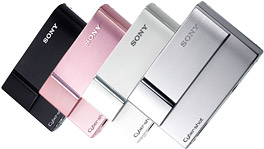
"Sony is introducing a line of slim and stylish Cyber-shot T-series cameras that are destined to be the fashionista crowd’s favorite party companion."

Sony's lovely marketing speak but they actually look pretty well featured. The 8 megapixel DSC-T100 has a 5x optical zoom and 3-inch LCD screen and is available in red, black and silver.


Also 8 megapixels, the DSC-T20 has a more usual 3x optical zoom and a 2.5-inch LCD screen and will be available in pink, white, black and silver.

At less than half an inch thick, the cameras are easily portable and you can even buy matching cases in pink, red, green, grey, crème, brown and black! Good for the ladies ;)

Bluetooth headphones

I like the sound of these (no pun intended) bluetooth headphones. The idea of wireless headphones appeals, tangley wires always annoy me. These look perfectly suited for using in the house maybe streaming music from iTunes or something if your computer (or any other bluetooth-enabled music device) supports A2DP, AVRCP, HFP or HSP stereo bluetooth profiles, which my Mac doesn't.


They've got a 17-hour battery life (200 in standby) and you can even use them with your mobile phone to answer and end calls with the press of button. Nice.

Thursday, 1 February 2007

Panasonic Lumix FX30

Panasonic have announced a new ultra-compact camera, the world's thinnest at 22mm, with a wide angle 28mm lens. The zoom is 3.6x, so as well as the wide angle for capturing large group shots, landscapes or buildings, you still get the 100mm top end for far off subjects.

It's 7.2 megapixels, has a 2.5 inch LCD screen, high ISO setting and Panasonic's latest image processing engine, Venus III.


It has some other nice tricks up its sleeve as well, like optical image stabilisation, 848 x 480 widescreen video mode and a clever additional zoom that lets you go up to 5.3x but only using the centre of the CCD at 3 megapixel resolution, potentially very useful in certain situations where resolution isn't paramount.

Certainly looks like a really interesting little compact and, if it takes good pictures, it could take over from the Canon 850 IS as my new favourite. I'll be on the lookout for the first reviews.

It will be available in the UK in March. Panasonic UK site.

Monday, 16 October 2006

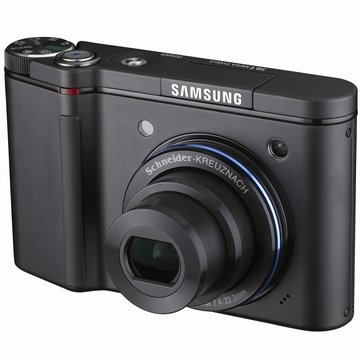
Samsung NV10 - point and shoot impressions


Samsung NV10

-10.1 Megapixels
-3x Optical Zoom
-Advanced Shake Reduction (ASR)
-“Smart Touch” User Interface
-Large 2.5" TFT LCD
-ISO 1000

Over the weekend, I got to put the NV10 through its paces a little, I say a little because I didn't use it as anything more than a put-it-in-your-pocket snapper.

I had fairly high hopes for this little fella, I like the retro black look and the hookup to my Mac was as usual, a piece of cake.

However for a 10.1 megapixel camera I hoped for more and those hopes were mostly dashed.

The unit is small and light, but the screen's prone to scratching, the USB cable that plugs in and acts as a charger too, means you can't stand the camera up whilst connecting it to your computer, which means it lays on its screen or face -neither being ideal.

The back is lined with a series of touch sensitive, contextual buttons. It takes a bit of getting used to, but it does work. Not great if, like me, you choose your settings as you go, lining up a shot then needing both hands to operate the touch sensitive buttons on the back.

The macro mode is good, but didn't seem as good as the Sony T10 I used recently. The resulting images are ok, but again, I've been more impressed with my rather old (if now broken) Sony P10.

The camera responds quickly, the burst modes and video modes work well, time between shots seems fast and initial switch on to picture taking was acceptable - but overall I was disappointed.

The unit's realtively cheap to buy, about £225 on-line. And for that sort of money maybe I'm being too harsh. However, I thought that image quality was lacking, colours seemed quite dull and the heralded ASR (anti-shake to help with your images) wasn't that great either.

I've not gone through the unit exhaustively, in fact I've used it as I would any easy to pick up point and shoot. But in those circumstances, my 4-year old Sony P10 did a better job, albeit slower and more chunky.

Tuesday, 26 September 2006

Compact digital camera roundup

People ask me all the time "Which camera should I buy?", by which they are normally referring to a point and shoot digital compact.

Over the summer there have been new compacts announced by pretty much all of the major manufacturers, so here's a summary of some of the best and a quick feature comparison.

I hasten to add, I haven't used any of these cameras, so make sure you read some proper reviews before making any purchasing decisions!

I've selected the newest, most comparable offerings from each manufacturer, so these are really the high-end of the ultra-compacts with the latest features, not your budget cameras.

So, here they are, in alphabetical order:

Canon Digital IXUS 850 IS
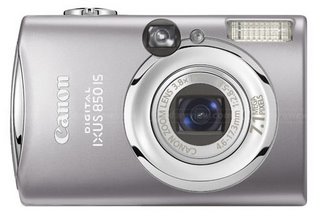

  • 7.1 megapixels
  • 2.5" LCD
  • 25.1mm thick
  • 640 x 480 @ 30 / 15fps movie mode
  • ISO 1600
  • 3.8x optical zoom
  • Face Detection / 9-point focus
  • SD / SDHC / MMC memory cards
  • Optical image stabilisation
  • Approx. 270 shots on one charge

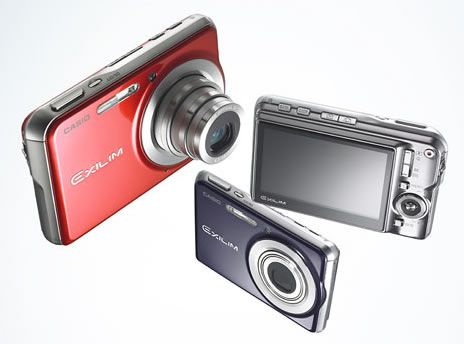
Casio EXILIM Card EX S-770
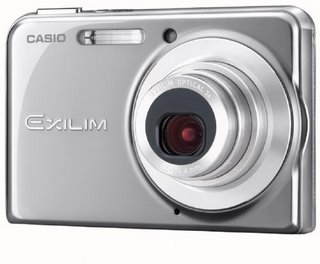

  • 7.2 megapixels
  • 2.8" widescreen LCD
  • 17.3mm thick
  • 704 x 384 (Wide), 640 x 480 movie mode
  • ISO 800 (Anti Shake or High Sensitivity modes)
  • 3x optical zoom
  • 9 point multi focus
  • SD / SDHC / MMC memory cards
  • Anti-shake DSP
  • Approx. 200 shots on one charge

Nikon Coolpix S7c
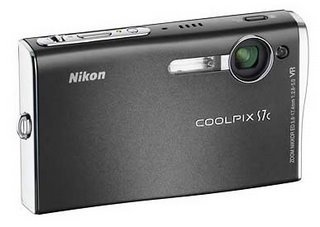

  • 7.1 megapixels
  • 3.0" LCD
  • 21mm thick
  • 640 x 480 @ 30fps movie mode
  • ISO 1600
  • 3x optical zoom
  • Face-priority AF focus
  • SD memory cards
  • Vibration Reduction
  • WiFi connection
  • Approx. 200 shots on one charge

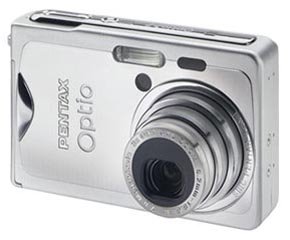
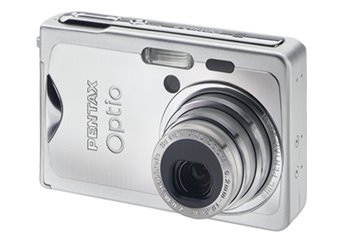
Pentax Optio S7


  • 7.0 megapixels
  • 2.5" LCD
  • 19.5mm thick
  • 640 x 480 @ 30 fps (DiVX) movie mode
  • ISO 400 (800/1600 at 4 MP)
  • 3x optical zoom
  • 5-point multi focus
  • SD / SDHC / MMC memory cards
  • Blur reduction mode
  • Approx. 180 shots on one charge

Sony CyberShot DSC-T10
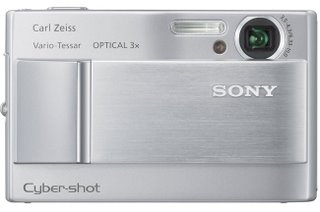

  • 7.2 megapixels
  • 2.5" LCD
  • 20.6 thick
  • 640 x 480 @ 30fps movie mode
  • ISO 1000
  • 3x optical zoom
  • 5-point multi focus
  • Memory Stick Duo™ / Memory Stick Duo™ Pro memory cards
  • Optical image stabilisation
  • Approx. 250 shots on one charge

Comparison table

(click image for large, readable version!)


So, all of the cameras have about the same resolution sensors; similar sized, decently large screens; similar movie modes and at least some kind of anti-shake or blur reduction.

I think table shows that spec-wise the Canon is the leader with it's high ISO 1600 sensitivity, optical image stabilisation, 3.8x zoom, face detection auto-focus and 270 shots on one charge. However, it does sacrifice on it's size and weight and is the most chunky of the 5.

The smallest is the Casio at just 17mm thick, nearly 8mm thinner than the Canon, while still managing to pack a 2.8" 16:9 display (the only widescreen display amongst this bunch), a 3x zoom, the same resolution and good battery life. It also has a widescreen movie recording mode. Very impressive and if having the most ultra-compact camera is what you're after, this is the one.

The Nikon has the largest screen at 3" and is the only camera here with WiFi for transferring images to your computer or printer wirelessly (although that may be frustratingly slow when downloading a whole memory card). It also has the same high ISO 1600 sensitivity and face recognition auto-focus as the Canon but it is also the second thickest after the Canon and doesn't support the new SDHC memory card format.

The Pentax doesn't really best any of the others in any category but it isn't too far off in most areas. It's the second thinnest after the Casio but it has the worst battery life at only 180 shots and only manages 4 megapixels at it's high sensitivity setting (7 megapixels normally). Otherwise, it's pretty much in line with the others with the 2.5" LCD, 3x zoom and 640 x 480 30fps movie mode.

Finally, the Sony is similar to the Pentax but slightly thicker, it does though have the second best battery life and is the only one here, other than the Canon, to have proper optical image stabilisation. But one of my pet hates about Sony is their insistence on using their own memory card format. All the other cameras here use SD but the Sony uses Memory Stick Duo, so if you already have SD cards, you're going to have to buy all new Memory Stick Duo cards to use the Sony.

So, which one would I buy? In the absence of hands-on reviews, judging purely on the specs and what I know of previous cameras from these manufacturers, I would say if you don't mind the extra bit of bulk, the Canon will probably take the best pictures but if smaller is better, then the Casio could well be the one. I would also consider the Nikon as it's possibly the best all round compromise between features and size.

I definitely recommend you try and find some decent reviews of these cameras before buying one though and as always, go into Jessops or something, have a look and try them out as well.

dpreview.com is always a good place to find excellent reviews.

Tuesday, 5 September 2006

Canon 400D preview

Digital Photography Review have just posted a great preview of the new Canon 400D, a 10 megapixel DSLR.

It's typically thorough and detailed. Definitely a recommended read if you are considering getting one:

http://www.dpreview.com/articles/canoneos400d/

Being an owner of a 350D for less than a year, unfortunately I can't justify the purchase but it does sound like it's a great update to Canon's popular entry-level DSLR.


Wednesday, 23 August 2006

New Canon 400D 10.1 megapixel DSLR

Update: Canon today confirmed the 400D (XTi in the US), specs as below.

Looks like Canon are releasing a new DSLR, the 400D. It cropped up on the Canon China site for a while but appears to have been removed now.

The specs are as follows:

  • 10.1 megapixel CMOS
  • 2.5-inch LCD
  • 9 point focus system
  • Fast 0.2 second start-up time
  • 3fps 27 frame burst
  • 1600 ISO setting
  • DIGIC II processor
  • Integrated Self Cleaning Sensor Unit
  • Software to delete any dust left over
Canon certainly needed to move to counter Nikon's new D80 and this successor to the 350D looks like a worthy update.

Thursday, 10 August 2006

Ultra-slim Casio EXILIM Card EX-S770

There seems to be a plethora of new cameras at the moment, this time it's the ultra-slim Casio EXILIM Card EX-S770.

It has a 7.2 megapixel resolution and a 2.8" inch LCD but it's an unbelievable 17mm thin and only weighs 127g. That's pretty incredibly thin.

Impressive stuff. If this takes good pictures too, it could just be my next new (ultra) compact. Looks pretty sweet as well.


Wednesday, 9 August 2006

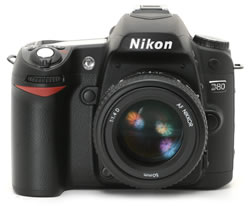
Nikon D80 10.2 megapixel SLR

The replacement for the very successful D70/D70s has finally been announced today. The D80 features a new high resolution 10.2 megapixel CCD, improved 11 area auto-focus, a larger and brighter 2.5 inch LCD display, powerful new image processing and metering, configurable auto and high ISO settings and other improvements, many of which are passed down from the pro level cameras.

They've also switched from Compact Flash to SD/SD-HC memory card support with the new camera, leaving Compact Flash for the pros. The D80 is also a bit smaller and lighter than the D70s.

Overall it looks like a great evolution of the D70s and is no doubt set to be as popular. Digital Photograhy review have a typically excellent, detailed preview of the camera (that they've been using for a couple of weeks already, lucky them).

Looks like Canon have some catching up to do, I wonder how long it will be before we see a new version of the 350D?

Wednesday, 2 August 2006

New digicams from Sony and Pentax

Sony today announced the 7-megapixel Cyber-Shot DSC-T10 digital camera. It's got a (pretty much standard these days) 2.5 inch LCD and 3x optical zoom lens. And with the increasingly common optical image stabilisation and high ISO (1000) as well. Comes in a choice of colours too - black, white, silver and pink!

Pentax announced the new Optio S7 last week as well. This also features a 7-megapixel sensor with a "Blur Reduction mode" high sensitivity setting - up to ISO 1600 (only at 4 mp though). Some new Face Recognition AF & AE for "photos of people with perfectly focused faces" has been thrown in for good measure along with a DivX Movie Mode and support for the latest SDHC memory card format.